Is it your product or your marketing? Answer these 15 questions before you spend another dollar.
Traffic can't fix a product problem. Here's how to tell which one you have.
I've spent my career getting products in front of people. The programs I've run helped take DaveRamsey.com from around 280,000 monthly visitors to 3.4 million, and Dr. Axe from 500,000 to more than 12 million. Across every client I've worked with, the total is more than 2 billion clicks.
All that traffic taught me one expensive thing: it can't fix a product problem.
If the product is confusing, more visitors means more confused visitors. If the first ten minutes disappoint, a bigger ad budget buys more disappointment, faster. The spend goes up, the results don't, and everyone blames the channel.
So before you hire an agency, rewrite your homepage, or double your ad spend, answer a harder question. Is the problem your marketing, or the thing you're marketing?
You'll start with what you know best
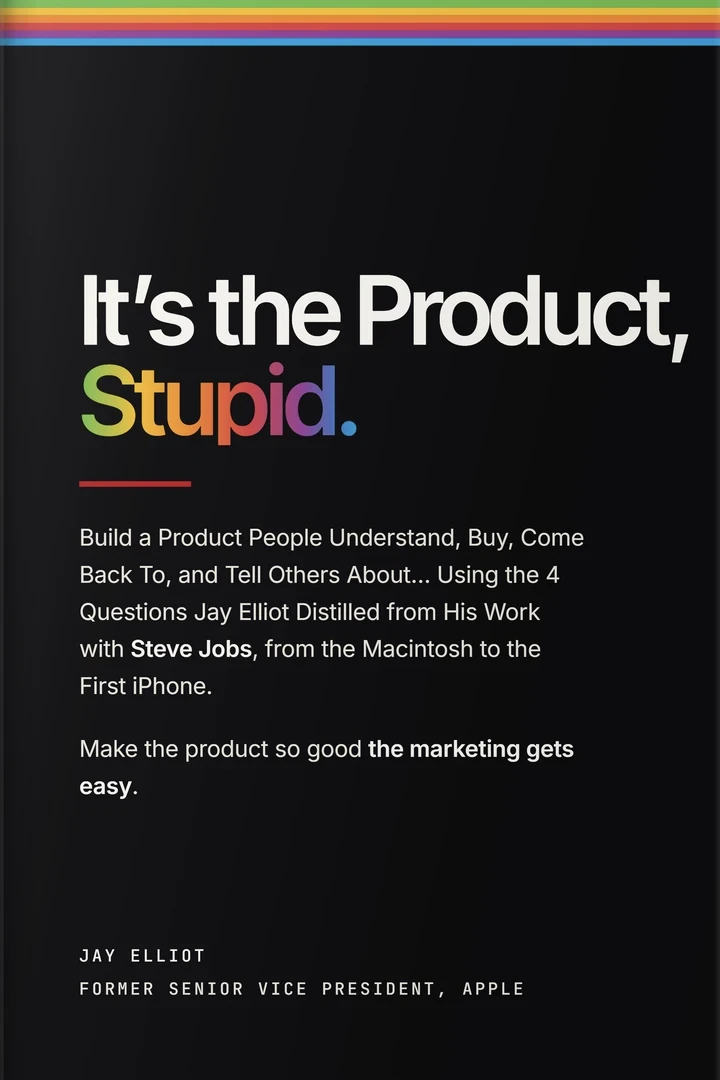
Jay Elliot was a senior vice president at Apple during the Macintosh years. In his book It's the Product, Stupid, he describes the trap I've watched people fall into my whole career:
"Before you repair a product, you have to know where the problem is. Founders often begin with the area they know best: a marketer changes the campaign, an engineer adds a feature, and a salesperson makes another offer. That may create activity without touching the thing holding the product back."
I'm the marketer in that sentence. When something isn't selling, my first instinct is to fix the message. Sometimes that's right. Often it isn't, and I've learned to check before I touch anything.
The book's check is a one-page tool called the Constraint Finder. Jay calls it "the doorway into the tools," and it's fifteen yes-or-no statements in three groups: the product, the experience around it, and the marketing.
The rule that makes it work is simple: "Do not answer for the product you expect to have later. Answer for the product another person can use today."
The 15 questions
Mark each statement yes or no. Be strict. If you have to explain why it's "sort of yes," it's a no.
Mark all 15. The group with the most no answers is your leading constraint.
Score it
Count the no answers in each group. As the book puts it, "The category with the most No answers is your leading constraint."
Then finish one sentence: My leading constraint is ______.
Here's the part I wish every client read before they called me: "If Marketing is weakest while Product and Experience are sound, more reach may help. If Product or Experience is weakest, more traffic will only put more people in front of the weakness."
What your score means
If marketing has the most no's, that's good news. The product holds up and the experience works; the right people just aren't finding it, or the offer isn't clear fast enough. That's fixable, and it's my world. Start with statement 12. Read how your best customers describe the problem in their own words, then use those words.
If the experience has the most no's, the product may be good and the path to it is broken. Somebody has to find you, sign up, open the box, get a first result, and pay the invoice. Every one of those steps tells them what kind of company you are. Start with statement 6: walk the whole journey yourself this week, the way a stranger would.
If the product has the most no's, stop spending on reach until you've fixed it. It's the hardest result to accept and the cheapest one to act on, because every dollar you don't spend on traffic is a dollar you keep. Start by putting the product on the table and asking four plain questions about it: what you're creating, who uses it, what they need to succeed, and what your product brings them.
If two groups tie, start with the one closer to the product. Great marketing can't rescue a broken experience, and a smooth experience can't rescue a product nobody needs.
The product is king
In an earlier book, Leading Apple With Steve Jobs, Jay describes what happened at Apple when the loudest voices in the building belonged to sales and marketing. His conclusion fits in one line: "The mantra must become, 'The product is king.'"
That doesn't mean marketing doesn't matter. It means marketing works on top of the product, never instead of it.
The statement I watch most closely is number 3: customers mention it to other people without being asked. That's the cheapest marketing there is, and no budget can buy it. You can only earn it with the product.
Your answer will change
Jay is clear that the result isn't a label you keep. As he puts it, "a diagnosis is useful because it tells you where to look next, not because it gives you something permanent to defend." Fix the constraint, then take the test again. It will move, and so will your work.